Oven problems · 02 of 18
Forty-Minute Preheat on a Wolf Oven
Short answer
A preheat that has crept out to forty minutes means the oven is heating on less than it had when new. On an electric Wolf that is usually one element that has stopped working, or a supply below 240 volts; on an all-gas range, a burner slow to light or a convection fan switched on too early. Summit Cooking Appliance Service, (425) 272-6613, finds which on an $89 visit.
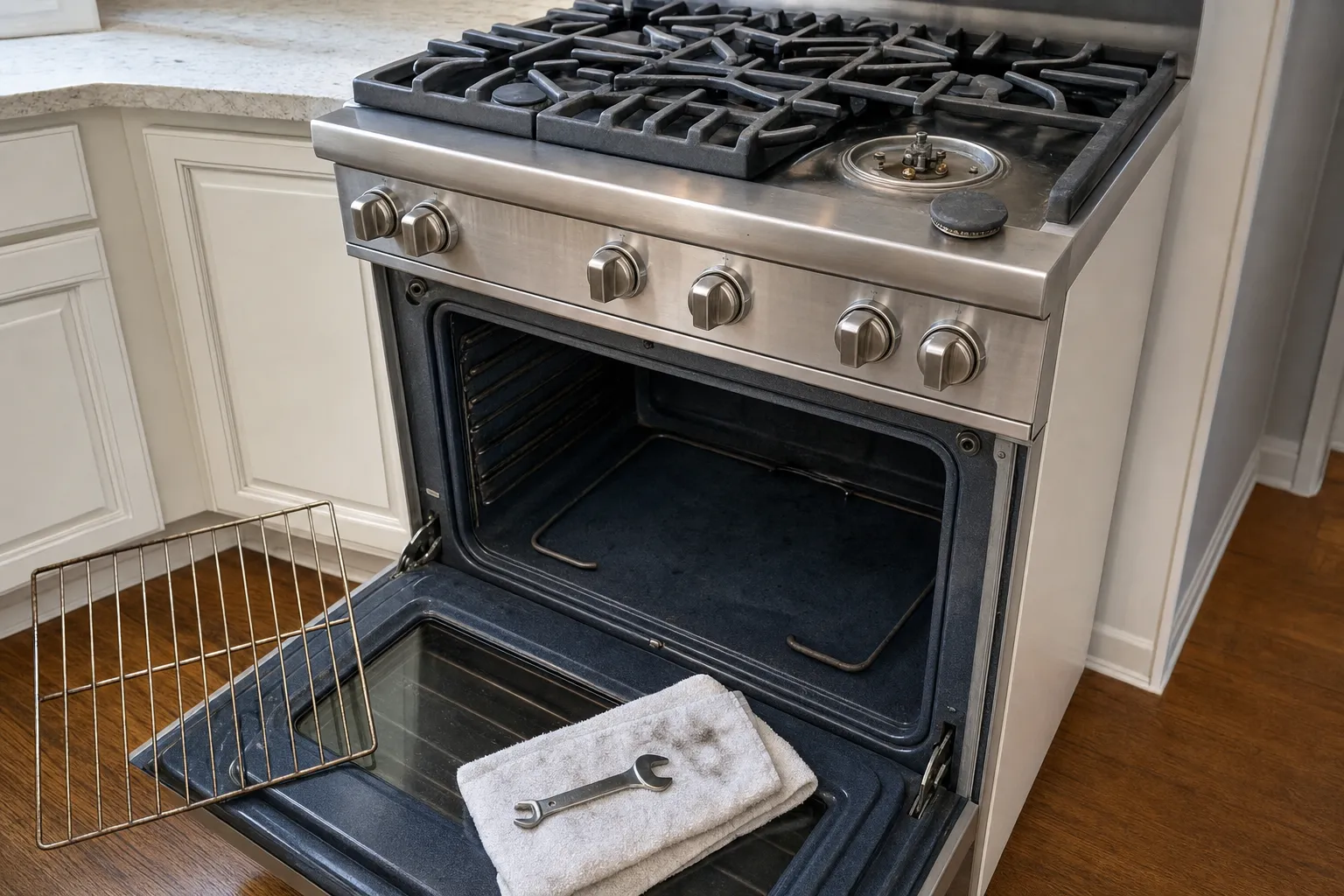
Oven fault, Issaquah or along I-90
Summit Cooking Appliance Service
One visit reads the appliance and the installation around it. The $89 call-out pays for that reading and is deducted once you sign off the repair. Visits run 8:00 am – 8:00 pm, seven days; phones picked up 24/7.
Why the wait grows
Wolf’s dual-fuel guide describes preheat as heating the cavity as quickly and evenly as the oven can, and it closes with a chime. When an electric oven loses one of its elements, it still gets there on what remains, only slowly, and once it is up to heat it can cook almost normally because the control simply keeps the surviving heat switched on longer. That is why a slow preheat is often the first and only sign of an element that has opened.
The circuit behind the cabinet
Wolf’s dual-fuel installation guide and its E Series oven design guide both list a 240/208-volt supply. The arithmetic is plain: an element fed 208 volts produces about three-quarters of the heat it makes on 240. Some apartment and condo buildings are wired at 208, so an oven that has been slow since the day it went in may be meeting its building rather than failing. An electrician can say which your kitchen has.
On an all-gas range
A GR oven burner is lit by an electrode, and whatever slows that ignition drags the whole cycle out: a dirty electrode, a pinched wire, or a convection fan lifting the flame during preheat.
Before you book
- Time one preheat from cold with the racks in and nothing else in the cavity: until the chime on a dual-fuel range, or until the indicator light goes out on a gas range. Write the minutes down.
- On a Wolf gas range, leave the convection fan off until preheat has finished. Wolf says starting it early can lift the flame away from the electrode and even shut the oven down.
- While it heats, look through the glass at any element you can see for one that stays dark along part of its length. Look only: Wolf warns an element can be hot while it looks dark.
- Stop there. Whatever sits behind the appliance's own panels, on its gas valves or live inside it is ours to test: call Summit Cooking Appliance Service on (425) 272-6613 and say what you found in the steps above.
Questions
How long should a Wolf oven take to preheat?
Wolf's use and care guides for its ranges give no single figure, because it depends on the model, the setting and the supply. The number that matters is your own: if preheat takes far longer now than when the oven was new, something has changed. Summit Cooking Appliance Service, (425) 272-6613, starts from that comparison.
Signed
Imogen Fairhurst
Bench specialtyovens and calibration